

In today’s digital age, everything—from shopping and bill payments to booking doctor appointments—is just a click away. While younger generations adapt quickly to these changes, many senior citizens in India are struggling to keep up.
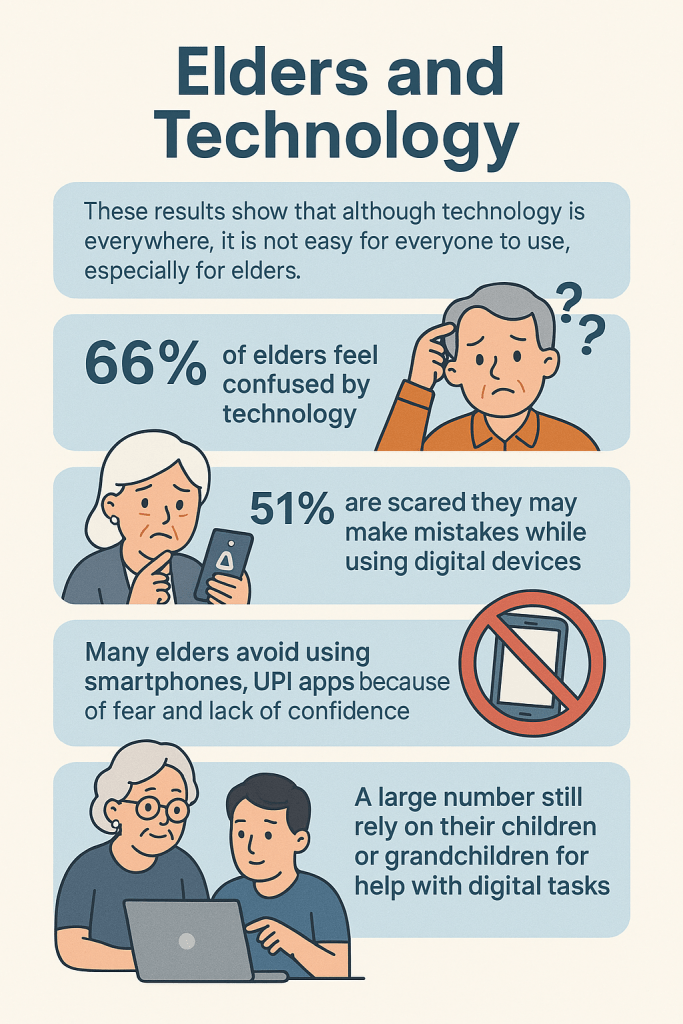
A recent study by HelpAge India, a well-known organization dedicated to elderly welfare, reveals that over 66% of senior citizens find digital technology confusing—that’s two out of every three elders.
What the Study Found
The report, titled “Understanding Intergenerational Dynamics and Perceptions on Ageing”, surveyed 5,798 individuals across ten cities, including both young adults (aged 18–30) and senior citizens (aged 60 and above). The aim was to understand how older adults perceive technology and how the younger generation views their elders’ relationship with it.
Why Are Seniors Struggling?
There are several reasons why many older people find it difficult to use digital tools. Let’s break it down:
- Fear of Making Mistakes: Many seniors worry about pressing the wrong buttons, breaking something, losing money online, or falling victim to scams.
- Lack of Training: Unlike the younger generation, most seniors didn’t grow up using smartphones or computers. They were never formally taught how to use them.
- Complex Designs: Many apps and websites are designed with tech-savvy users in mind. For seniors, small fonts, too many steps, and cluttered interfaces can be overwhelming.
- Memory and Vision Challenges: Age-related memory decline and vision issues make it hard to remember passwords or read small text on screens.
- Language Barriers: Most apps are in English. Many elderly people—especially in rural or semi-urban areas—are more comfortable in regional languages, creating an additional obstacle.
What Do Young People Think?
Interestingly, the survey also asked younger respondents how they perceive their elders’ relationship with technology. Many believe their parents or grandparents simply aren’t interested in learning. But this assumption is often wrong. In reality, many seniors are eager to learn—they just don’t know where to begin.
This generational disconnect creates frustration on both sides: seniors feel left out, while younger people may feel impatient when asked for help.
Technology Can Help—If We Help Them Use It
Despite challenges, many seniors are gradually adopting digital tools, and it’s making a noticeable difference in their lives. For instance:
- 73% of seniors said technology helps them stay connected with family and friends.
- During the COVID-19 pandemic, apps like WhatsApp and Zoom enabled them to video call loved ones far away.
- Some seniors now use online banking, medicine delivery apps, and YouTube for spiritual content and daily news.
So, it’s not that older adults don’t want to use technology—they simply need support, patience, and user-friendly tools.
How Can We Help?
Here are practical ways we can make the digital world more accessible to our elders:
- Teach Them Patiently: Take the time to demonstrate how to send a message, check the weather, or use basic apps. Go slowly, repeat steps, and avoid rushing.
- Enable Regional Languages: Show them how to switch apps and phone settings to their preferred language—Hindi, Bengali, Tamil, etc.
- Use Senior-Friendly Features: Set up phones with larger fonts, simplified interfaces, and one-touch buttons. Some smartphones even offer “senior mode.”
- Encourage Digital Literacy Workshops: NGOs like HelpAge India offer free workshops on using phones and staying safe online. Encourage your elders to attend.
- Be Kind and Encouraging: If a senior forgets something you just taught them last week, don’t get irritated. Stay calm and use positive reinforcement to boost their confidence.
The Risk of Leaving Seniors Behind
Failing to help seniors adapt to technology can have serious consequences:
- Financial Exclusion: Banking, pension services, and bill payments are increasingly online. Seniors risk losing access to essential financial services.
- Social Isolation: Without digital tools, many seniors feel cut off from family and friends.
- Vulnerability to Scams: Seniors unaware of online threats are prime targets for cyber fraud.
Digital literacy isn’t just about access—it’s about safety and dignity in the digital era.
The Cybersecurity Angle
As more seniors start using digital platforms, cybersecurity becomes crucial. It’s not just about learning how to send a message or make a video call—it’s also about avoiding scams and protecting personal information.
Some common scams targeting seniors include:
- FedEx Scam: Fake messages claim a parcel is stuck or contains illegal items, urging recipients to click a link or contact a fake official.
- Digital Arrest Scam: Scammers impersonate law enforcement, threatening arrest unless a fine is paid immediately.
- Fake Government Links: Fraudulent messages ask users to update Aadhaar, PAN, or claim refunds—often to steal sensitive data.
- Power Bill Scams: Messages claim the power will be cut unless an immediate payment is made via a fake link or number.
- Traffic Ticket Scams: Messages about unpaid tickets include malicious payment links.
- Gift Package Scams: Seniors are told a relative has sent a gift, and they must pay a fee to receive it—another trick to steal money.
These scams rely on fear and urgency to deceive. Therefore, seniors must learn to:
- Identify fake messages and avoid suspicious links
- Understand that legitimate authorities never ask for money over calls or apps
- Use built-in phone tools to block and report scam callers
This is where the younger generation plays a critical role—not just in fixing problems quickly, but in teaching, explaining, and empowering elders to handle these issues independently.
C3iHub’s Contribution to Cyber Awareness
To truly protect senior citizens from digital threats, awareness is the first line of defense. That’s why institutions like C3iHub at IIT Kanpur are creating cybersecurity content that is simple, engaging, and accessible.
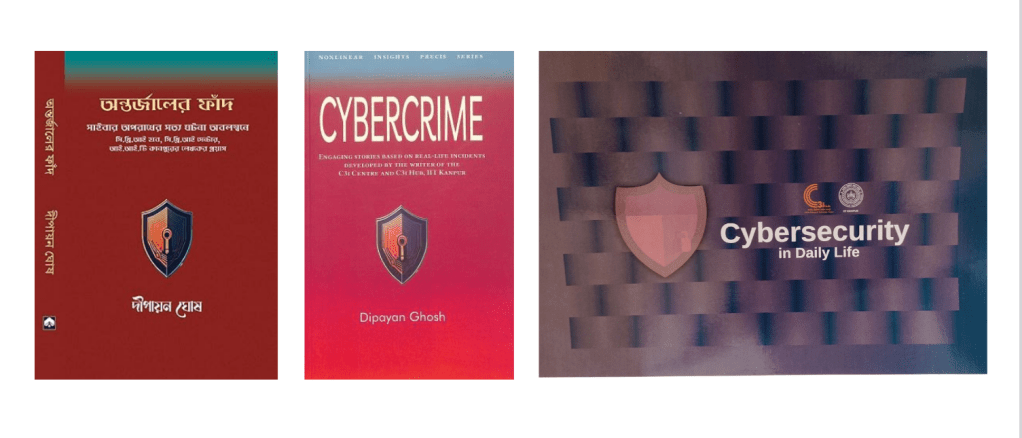
Understanding that not everyone connects with technical manuals, the C3iHub team has produced both fiction and non-fiction books in Bengali, Hindi, and English, explaining cybercrimes through real-life inspired stories.
Some Recommended Titles:
- Antarjaler Fand (Bengali) & Cybercrime: Dipayan Ghosh (English)
A collection of regional cybercrime stories.
📘 Buy on Amazon - Cybersecurity in Everyday Life (English) & Dainik Jeevan Mein Cybersecurity (Hindi)
Focuses on digital safety in day-to-day scenarios.
 C3iHub, IIT Kanpur
Leave a comment